“It Is Essential That the Entire World See and Hear”: Bereaved Families Call for October 7 Forensic Evidence to Be Shared Internationally
Bereaved families called for forensic evidence documenting the atrocities of October 7 to be shared with the international community, saying the findings are essential to ensuring the world understands the full scale of the attacks.
Forensic specialists presented harrowing revelations, including evidence of temperatures exceeding 800 degrees Celsius, the use of accelerants, and what experts described as a “crematorium effect.”
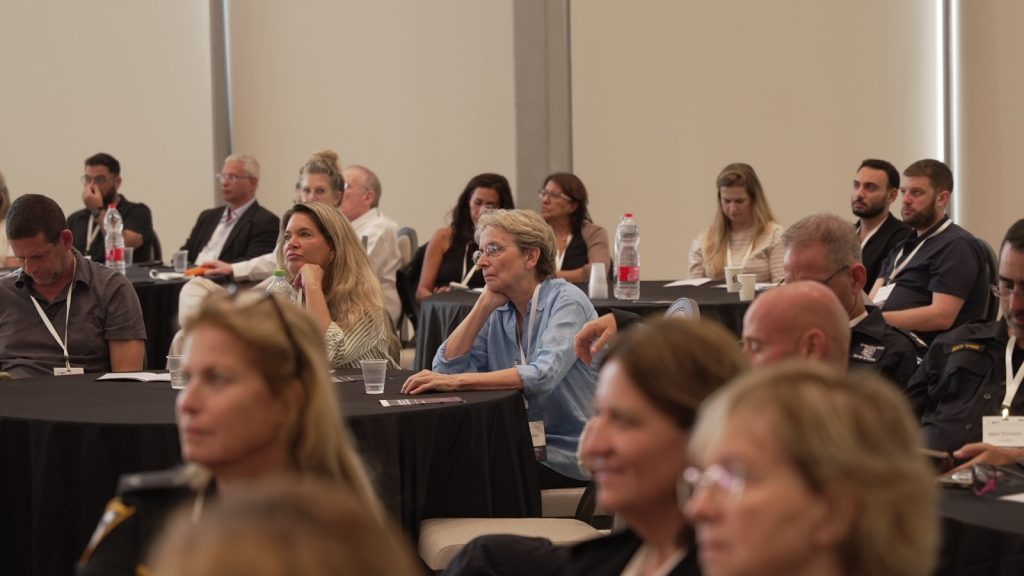
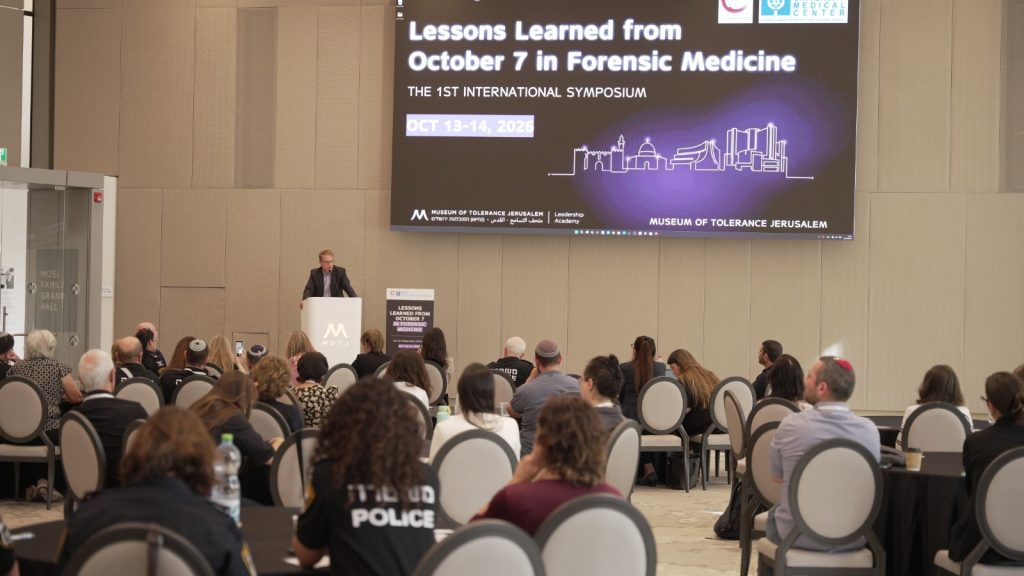
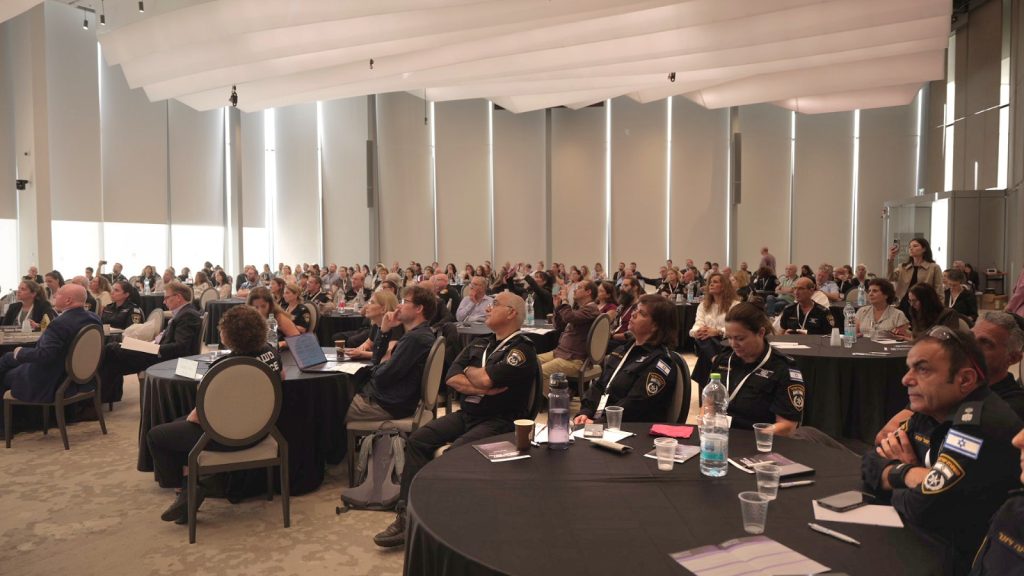
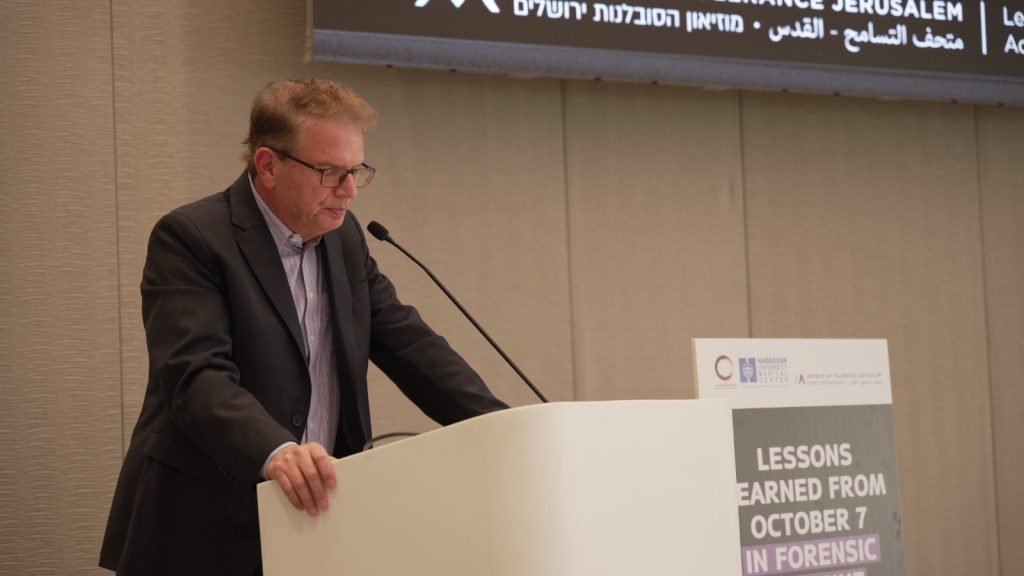
The findings were presented at an international conference on forensic medicine and victim identification that opened Tuesday at the Museum of Tolerance Jerusalem. Led by Hadassah Medical Center in partnership with the Museum, the October 13-14 conference brings together leading experts from Israel and abroad to share findings and examine the unprecedented challenges involved in identifying victims of the October 7 attacks.
Eyal Eshel, whose daughter Roni Eshel, who was murdered at the IDF observers’ command center at Nahal Oz on October 7, called on those documenting the atrocities to bring the forensic evidence before the world.
“As Roni’s father, a courageous observer who devoted her body and soul to protecting the residents of the Gaza border communities and IDF soldiers, and was burned alive, I call on everyone involved in telling Israel’s story and bringing the atrocities of October 7 to the world: take these difficult forensic reports and present them to the international community, so people understand what happened here and grasp the magnitude of the human atrocity perpetrated by Hamas,” Eshel said.
“Sometimes all that remains is a single hair, sometimes the tip of a fingernail, and sometimes a piece of charred remains. It is essential that the entire world see and hear.”
Leah Goldin, mother of the late Lt. Hadar Goldin, also addressed the conference. She spoke about the importance of certainty for bereaved families and the anguish of not knowing what happened to their loved ones.
Alongside the families’ testimonies, leading forensic and victim-identification specialists presented their findings from October 7 and described the extraordinary challenges they faced in the aftermath of the attacks.
Prof. Chen Kugel, director of Israel’s National Center of Forensic Medicine, described how the identification effort began without a definitive list of missing persons. At the time, neither the number of victims nor their identities was known.
Kugel compared Israel’s efforts with the identification process following the September 11 attacks in the United States. Of the approximately 2,750 people killed at the World Trade Center, he noted, only around 1,800 had been identified, even 25 years later. The comparison highlighted the immense challenges involved in identifying victims after mass-casualty events and the complexity of the work undertaken by Israel’s forensic teams.
Kugel also described the work of a special team established after October 7 to investigate 44 cases involving hostages taken into Gaza whose fate remained unknown. By analyzing security-camera footage and examining the available forensic evidence, the team determined that all 44 hostages had been murdered, even though their bodies were not in Israel’s possession. According to Kugel, the team developed an innovative methodology that made it possible to determine that the hostages had died without examining their bodies.
Dr. Nurit Bublil of the National Center of Forensic Medicine discussed the challenges of extracting DNA from samples exposed to temperatures exceeding 800 degrees Celsius. The findings pointed to deliberate and systematic actions. “They came prepared,” she said. In some cases, laboratories received just two bones in a bag. Identifying the victims required advanced forensic techniques and extensive cross-referencing of data.
Dr. Naama Samet-Rubinstein, a dentist who volunteered in the victim-identification effort at the Shura military base, described the difficulty of identifying remains so severely burned that even the teeth were charred. The condition of the remains made conventional dental X-rays inadequate, requiring advanced imaging technologies, including CT scans. She also shared lessons learned about the handling and preservation of human remains following mass-casualty events.
The conference, led by Hadassah Medical Center in partnership with the Museum of Tolerance Jerusalem, is being held under the leadership of Dr. Ira Titunik and Prof. Esi Sharon of Hadassah. It brings together specialists from Israel and around the world to share the knowledge gained since October 7 and strengthen preparedness for future mass-casualty events.
Beyond its scientific and professional discussions, the conference highlights the importance of preserving forensic evidence and personal testimony, ensuring that the facts remain accessible to future generations. Since the outbreak of the war, the Museum of Tolerance Jerusalem has worked to document and preserve the stories of October 7, including through its exhibition, “06:29: From Darkness to Light.”
The families’ call to share forensic evidence with the international community reflects the Museum’s broader commitment to preserving memory, documenting the facts, and confronting hatred and terrorism.