Fauda Co-Creator: “Museums Have a Sacred Mission to Keep the Truth Alive”
At an international forensic conference organized in partnership by the Museum of Tolerance Jerusalem and Hadassah Medical Center, Israeli journalist and Fauda co-creator Avi Issacharoff reflected on October 7, the limits of what we thought we knew, and the responsibility to preserve the truth through storytelling.
Avi Issacharoff has spent decades examining the complexities of the Middle East. An Israeli journalist, Middle East analyst, and television producer, he is best known for co-creating the internationally acclaimed series Fauda. But the events of October 7 challenged everything he thought he knew over decades of reporting and storytelling.
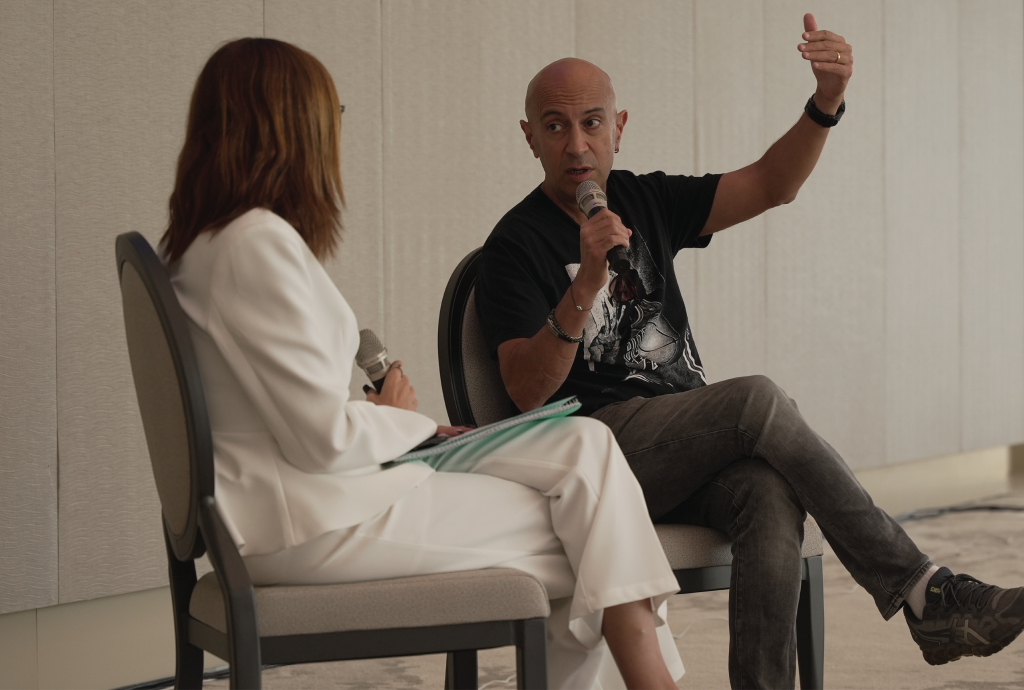
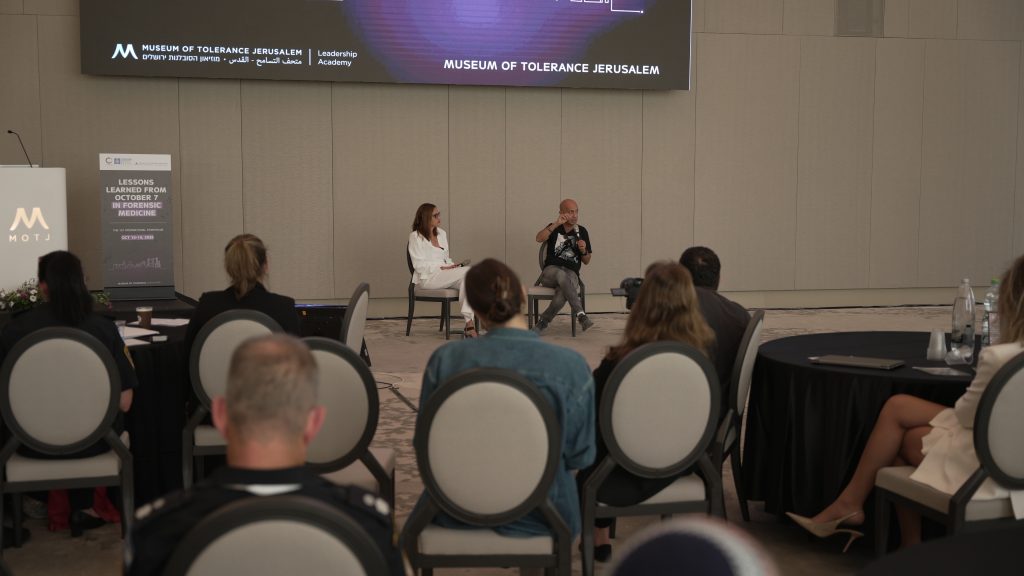
Speaking at Lessons Learned From October 7 in Forensic Medicine, an international conference organized in partnership by the Museum of Tolerance Jerusalem and Hadassah Medical Center, he explained that the connection between October 7 and Fauda took shape in the weeks that followed, as he began to absorb the scale of the loss and the anguish of families whose loved ones had been murdered or taken hostage.
Research for the fifth season drew directly on the atrocities of October 7. Issacharoff explained that scenes in episodes seven and eight were inspired by real events and by evidence from the attack, including the weapons carried by Hamas terrorists into Israeli communities.
But the attack also forced him to confront the limits of his own understanding.
“I reported about Hamas since 2000,” he said. “I thought I understood Hamas. I thought that I knew what Hamas is looking for, what Hamas wants.”
Despite having interviewed Hamas leaders, studied the organization, and reported on it for decades, he had not anticipated the transformation that led to October 7.
“I was shocked to understand how much I don’t know,” he said, describing the experience as a painful recognition that his assumptions had been wrong.
Issacharoff sees the responsibility to understand October 7 as inseparable from the responsibility to document it. He warned that evidence and testimony are being challenged in international public discourse, making the work of museums like MOTJ, journalists, and filmmakers all the more important.
“Museums, documentation projects, even TV shows have a sacred mission: to keep the truth alive, to keep people’s minds in the light and not in the darkness,” he said.
For the Museum of Tolerance Jerusalem, whose exhibition 06:29: From Darkness to Light documents the October 7 massacre and its aftermath, this mission is central. Through exhibitions, testimony, and documentation, the Museum brings audiences from around the world closer to the people and stories behind the events of October 7, preserving the voices of victims even when they can no longer speak for themselves.
Yet, October 7 has presented challenges far beyond the battlefield. Issacharoff said that Israeli storytellers like himself have seen projects connected to Israel canceled internationally as collaborators grew reluctant to participate. Changing perceptions, he acknowledged, will take time.
His response is to keep doing what he does best: telling compelling stories. Despite concerns that the fifth season of Fauda might face boycotts, he said it had become the show’s most-watched season, even in countries hostile to Israel, like Lebanon.
“We are storytellers,” he explained. “We truly believe that at the end of the day, if you bring a good story, if you create a good drama, people will bite.”
Reflecting on the attackers’ intentions, Issacharoff recalled the conclusion he had reached about Hamas: “They meant to commit genocide. The Jewish people, they wanted to eliminate Jews.”
Against that intention stands the work of those who document, remember, and bear witness. The forensic experts who painstakingly identify the dead, the families who share the stories of those they lost, and the institutions like MOTJ that bring those stories to audiences around the world all help ensure that the victims are not erased from history. Their work is an expression of collective responsibility: a refusal to let those who were murdered be forgotten, or the truth of what happened to them be lost.
When Issacharoff took the stage on Wednesday to close the two-day symposium, he brought the conference full circle. It had opened with deeply moving testimonies from the parents of October 7 victims, whose determination to ensure that the truth about their loved ones would be known underscored the human cost behind every piece of forensic evidence. It ended with Issacharoff reflecting on his own struggle to comprehend the lessons of that horrific day and what they mean for him as a storyteller.